


The Wisconsin Energy Cooperative News serves as the voice of the state's rural electric cooperatives. Founded in 1940, the publication focuses on statewide issues that affect electric cooperatives, promoting the general welfare of Wisconsin's electric cooperatives, their member-owners, and the areas they serve. While general pages publish a variety of useful and entertaining content (including a symbol search and the very popular recipe pages), you can also find personalized local pages with news, updates, and announcements specific to our members in the center of this magazine. You can find the most recent issue of the magazine HERE with our local pages featured below.
JREC Center Pages:
Please click on the month you would like to view and a pdf will open in a different screen.
| January 2026 | May 2026 | September 2026 |
| February 2026 | June 2026 | October 2026 |
| March 2026 | July 2026 | November 2025 |
| April 2026 | August 2026 | December 2025 |
Flambeau Draw Down
Strategic Priority: Safe Outcomes
Dairyland Power Cooperative (DPC) is urging caution to those who are using the Dairyland Reservoir for recreational activities during the seasonal transition.
As part of standard operations during the spring run-off, Dairyland has implemented a normal drawdown of approximately one and a half feet to help control levels during rapidly changing flows.
Fishers and boaters should also be cautious near the spillway, since hazardous currents can develop as flows increase. At all times of the year, dangerous reverse currents in the tailwaters of dams can cause fatalities. Please obey all warning signs, staying away from restricted areas.
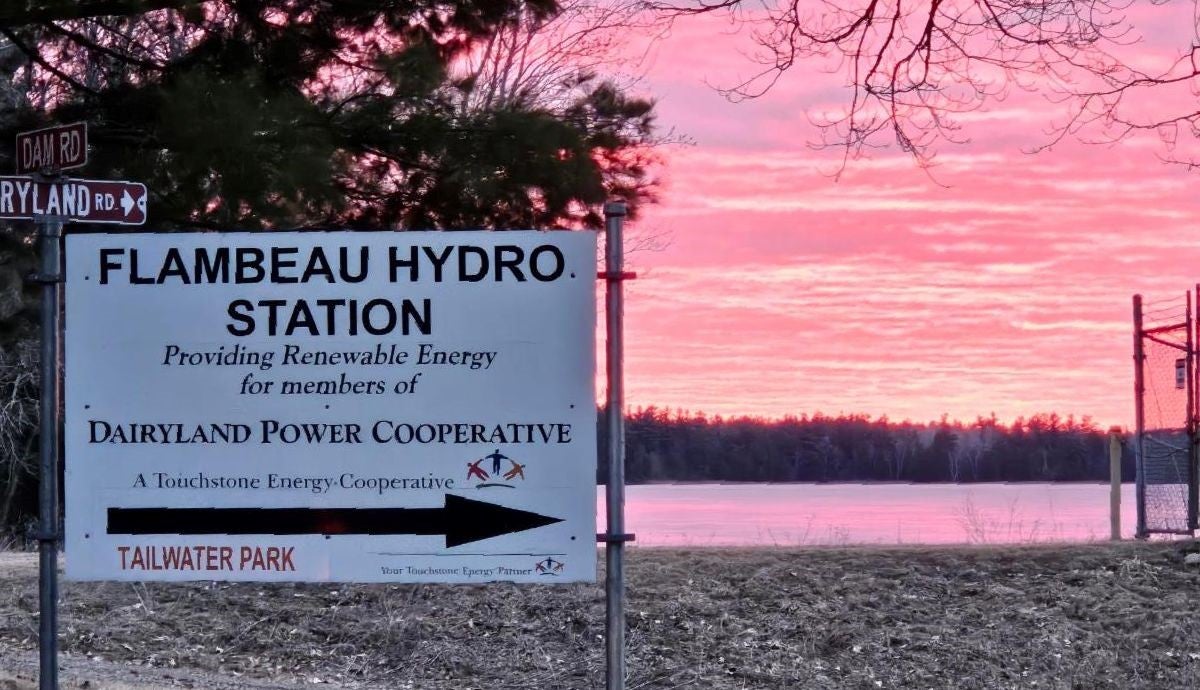
Photo captured by Dennis Arendt, DPC's Foreperson, Renewable & Combustion Turbine-Flambeau
Dairyland Power Cooperative is our wholesale power provider and the wholesale power contract plays a key role in delivering safe, reliable, and affordable electricity to our members. Learn how this long-term agreement supports power supply, planning, and regional energy stability.
|
Source: Midcontinent Independent System Operator The Midcontinent Independent System Operator (MISO) released its annual winter readiness assessment this fall, which shows adequate resources available for winter but highlights the potential risks and challenges associated with cold and extreme weather operations. MISO is the regional grid operator for 15 states and Manitoba, Canada, serving 45 million consumers. The winter forecast indicates near-to-slightly below-normal temperatures across MISO’s North and Central regions (Dairyland's service territory), while the South region is expected to experience above-normal temperatures. An active storm pattern is anticipated in the Central region pushing North, likely creating above-normal precipitation across the Great Lakes, while much of the South region is expected to remain dry. MISO expects peak winter demand to be around 103 gigawatts (GW), but it could reach as high as 109 GW. Last winter, MISO reached a peak demand of 108 GW on January 21, 2025, during Winter Storm Enzo. MISO officials noted they are implementing enhanced forecasting capabilities, dynamic reserves and outage coordination processes to ensure reliability amid load growth, the potential for severe storms and resource flexibility needs. |


Co-ops pro-solar, concerned over proposed third-party community solar bill
On Aug. 5, Wisconsin Sen. Duey Stroebel (Saukville) introduced SB 490 to the State Senate. Co-authored by State Rep. Tim Ramthun (Campbellsport), the bill would allow third-party community solar programs in Wisconsin. Third-party community solar is when a non-utility entity builds a solar array and sells subscriptions for the power generated by the array to utility customers. As proposed, SB 490 would apply to investor-owned utilities; electric cooperatives are currently exempt. However, policymakers could amend the bill and include cooperatives in the future.
As your local electric cooperative, we support renewable energy and common-sense solutions to reduce our carbon intensity. However, we want to make sure it is done in a way that is equitable for all members, supports a safe and reliable power grid, and doesn’t push additional costs onto non-subscribers. As a cooperative, we are concerned that, as written, the bill does not accomplish these objectives.
Dairyland Power Cooperative is our wholesale power provider and has set a goal to reduce their carbon intensity by 50 percent over 2005 levels by 2030. Currently, renewable energy makes up about 24 percent of Dairyland’s generation mix. In January, they began purchasing the electricity generated from 52 megawatts (MW) of the Tatanka Ridge Wind Farm. By 2023, they will add the 149 MW Badger State Solar array into their energy mix. This is building on the 18 local, distributed solar facilities totaling 25 MW already located in Dairyland's four-state service area.
As Dairyland transitions to more renewable generation, their main goal is to maintain reliable, safe and affordable electricity for members. We have extreme weather in Wisconsin and do not want to leave our members without power in the heat of summer or middle of a polar vortex.
Jump River Electric Cooperative supports renewable energy solutions that secure a reliable and economical energy future for all cooperative members.